X- Why I (finally) decided it was time to bid farewell to a favorite band.

I was first introduced to the band X in 1981, at the age of 13. A friend and musical mentor listened to them frequently and was a huge fan. As with most of his music suggestions, I loved what I heard. In fact, X quickly became one of my all time favorite bands and have remained so for the past 35 years.

X  has a sound that is a unique mixture of rockabilly, punk and even folk and country. They  remain one of the few bands in the world that always produced a  sound that was uniquely their own. From the poetic lyrics to the slightly off-kilter harmonies of singers John Doe and Exene Cervenka, I was drawn in at first listen and fully expected the band to remain in my top ten for the rest of my life.

X has been a part of my life for decades. My children know every song. My daughter attended her first concert when she joined me at an X show at the Irving Plaza just before she turned 16. This band meant something to me . That all changed after the tragedy at Sandy Hook.

I was unaware at the time, that Exene had a you-tube channel where she posted truther/conspiracy theorist rants that made her, quite frankly, sound like she had lost her mind. When a friend told me about  Sandy Hook conspiracy theorists  (A concept that literally turns my stomach), I did some research and found that Exene was among them.

To put this in perspective, I live about a mile and a half from Sandy Hook school. The families affected by this tragedy are a part of my community. I know some of them personally. I witnessed the devastation to a community and our entire country. For months after the tragedy, you could hear a pin drop while grocery shopping in town. People walked around in shock. The sadness was a living, breathing thing that I’m certain you have to experience to understand. Like others that lived or worked near other unspeakable tragedies we have experienced in this country over the past 2 decades, it’s so much more real when it happens right in your own back yard.

It was like a punch in the gut. This woman, an artist that I had admired and respected for most of my life, had turned into a human being that would accuse people in my very own community of being crisis actors. People that had suffered the greatest loss a person could imagine were being slandered by someone I’d admired and idolized. Delving deeper, her rants ranged from the typical conspiracy theorists views about the government attempting to take your rights away, to bat-shit crazy postings that made her appear racist, misogynistic, homophobic and truly scary. My mind was blown. Punk was about acceptance, right? I vividly recalled my own punk youth where, except for the greatly disdained racist skinheads, everyone accepted everyone else. But then I remembered something I’d tried to push back in my own mind for a  very long time. Something I liked to make myself believe had nothing to do with Cervenka’s own personal views (although rumors have always persisted about the racist nature of certain band members). And the lyrics to the song Los Angeles came back into my head. And they scared me.

“All her toys wore out in black and her boys had too
She started to hate every nigger and Jew
Every Mexican that gave her lotta shit
Every homosexual and the idle rich
She had to get out”.

I first became aware of Cervenka’s madness a few years ago and I stopped listening to the band. But after seeing John Doe and his band play a few X songs on tour recently, I started to listen again. I spent a month believing I was going to attend a show last night at the Irving Plaza. I even worked on getting a press pass. But yesterday morning, I was driving and decided to put X on. When Los Angeles came on, my mind was made up. I would not be going to the show and I’d be deleting the X songs from my playlists.

I’m fully aware that I certainly must listen to other songs that are, by nature, against my own moral code in one way or another. And I am certainly a huge believer in Freedom of Speech. But just as I witnessed Drive-By Trucker fans leave a show I was covering recently because the band had put up a “Black Lives Matter” poster (Really? Have you never listened to a DBT song?) it remains my choice whether or not I can support a band whose views (At least those of Cervenka) are so completely opposite of my own. And for me, the answer is no. John Doe is a different person and a different story. I will remain a fan and he remains a great musician in my eyes. He has also attempted to distance himself from the words of Cervenka.

Exene took her you-tube channel down after the shit hit the fan about it in 2014. She even issued a statement where she tried to make peace, but certainly never truly apologized. But morally, I can’t forget the things she said. Maybe Exene is truly mentally ill. If so, I genuinely feel sorry for her. But maybe this punk icon is really nothing more than a punk. There comes a time in your life when your own moral code makes you make some decisions based on what you believe is right and wrong. If I ever forget again, which I’m certain I won’t, all I will need to do is replay those lyrics in my head. Goodbye, X.


Johnny’s Records, Darien, CT.

Johnny’s Records was a place that changed my life. If not for owner John Konrad and his little shop on Tokeneke Road in Darien, CT , I have no doubt at all that my life would be very different today. Growing up in Fairfield County, Connecticut, we were pretty sheltered. Yes, we were a short 45 minute train ride away from Manhattan, but as young kids, we were ridiculously far removed the from culture, music, books and art that were so easy to find in the city. When Johnny’s opened in 1975, the area was a good 5 years away from even having a mall. Johnny’s became the only place for any music lover to go in the area.

I began to frequent Johnny’s in  1981 at the age of 13. I had discovered punk through a much older friend who lived in the city. He would play this music for me and I could not get enough of it. But where in the world would I find it in these upper middle class suburbs of NYC?  The first time I stepped through the doors of Johnny’s Records was like reaching Nirvana. It was instantly home. John Konrad, the owner of the store knew all of his customers by name. It didn’t matter if we were kids or adults, we were all treated with dignity and respect. John was quick to recommend new music and always remembered the music he had sold you the week before. If he didn’t have a record in stock, it would be ordered for you right away. And when no other store could track it down for you, he magically always could.

This tiny little record store opened its doors in October of 1975. Konrad has overcome some pretty rough times over the years. One such instance was when a group of town resident’s were determined to close down the shop because they were convinced it was a drug haven. ( In its earliest years, the store sold bongs and pipes, but certainly never drugs). This reputation was something it took John years to overcome.There was another very difficult time when revenue was really down and he was ready to close the doors of the store. As the world watched record stores come and go, gathering places for musicophiles, art lovers and those that appreciated an old school store where the owner knew you by name were disappearing. Napster and online shopping  were doing a number on the industry. Konrad had spent a few years allowing employees to take the reins while he went back to school and pursued other interests. Something, in retrospect, he knows was a huge mistake. As he prepared to say goodbye to the store he had put most of his entire adult life into, he realized that it was too much a part of him to allow that to happen. With tenacity, hard work and a love for what he does, Konrad was able persevere and ride the wave right into the vinyl record resurgence that the world has seen over that past 8 years or so. One day, seemingly out of nowhere, Konrad began to get calls and requests for vinyl. In two months time his vinyl inventory had tripled. And the demand for vinyl is increasing by the day.

Standing in this little shop, walls lined with artwork and posters, records stacked neatly in alphabetically ordered bins, what you notice first is the feel of the place. Konrad makes you feel as though you belong there. This becomes even more evident when other customers come walking through the doors. Konrad knows them all by name. Chats with them affably. Orders records that no-one else seems to be able to track down for them. It’s immediately clear that music, and this store, are his life. And that he really loves and excels at what he does.

Back in the 80’s Konrad was famous for driving around town in checkered Volkswagen Beetle, hand painted by himself and some friends. Everyone knew that car. It was a calling card. A come on down and see what you’re missing kind of advertisement that was, once again, uniquely Johnny’s Records. But the image fits. Comfort mixed with non conformity. Familiarity coupled with discovery. That’s what Johnny’s is about.

When people found out I was going to interview John for my blog, the stories came pouring in. There was the one from the guy that got caught trying to leave the store with a 12″ Misfits LP down his pants. When John caught him, he didn’t call his parents or the police. He just made him work it off at the store. And the one that felt like his home life was too turbulent and violent and spent as much time as he could in the store to avoid going home. While John never knew why, he welcomed him in the store for hours at a time, sensing he just needed to be left alone. Many people commented that Konrad was able to open their minds to music they would have never even considered listening to before.  Every single person that sent me a message had the same sentiment. Johnny’s Records was a one of a kind, life changing place. Countless people mentioned how they’d never be the people they are today had the store not existed. How often in life do we find places or people who mean so much to so many? Johnny’s is that kind of place.

When I first walked into the store for my interview, John was helping a Father and his little girl find a Beatles shirt that would fit her so they could go see a Paul McCartney concert later that evening. John observed that the little girl would always remember the time she and her Dad shared such an experience. When I was getting ready to leave the store and wrap up my interview , I watched John say hello to a Father and Son walking in. The son, who was about ten years old, made a beeline for the 45’s. Intrigued, I asked a few questions. It turns out that the son, Ethan Walmark , is on the autism spectrum and is somewhat of a musical savant. This incredible kid and his band have already opened for the likes of Lez Zeppelin, and have even played to a crowd of about 30,000 people at Jones beach. When I asked Ethan about the store and his favorite artists, he told me that Steve Winwood was probably his favorite and that he loved buying 45’s. As I chatted with his Dad about Ethan’s love of music, he told me that he asks to come to Johnny’s as often as he can. And how important buying this music was to him and his family. As they left the store it struck me, yet again, what this store and its owner have meant and continue to mean to people of all ages and all walks of life.


After 41 years, Konrad has seen children and even Grandchildren of his customers come through the doors. I hope to bring my own Grandchildren here one day. And to be able to share with them, like I have with my kids, what music means.

J. How long has the store been open?

JK: It will be 41 years in October.

J: What inspired you to open a record store?

JK: Well, I’ve been asked this question so many times. We are looking back an awfully long time and whatever I say will probably be made up! The more I’m asked this question, the less sure I am of the answer. I wish I could go back and ask myself “John, what were you thinking?” I guess I was just looking for something to do.


J:What is your favorite kind of music and when did you first start really listening to it?

JK:  I’m all over the place. I’ve always been all over the place. When I was about 5, my Dad had a friend in the industry and he was always bringing home bags full of 45’s. There was no specific genre. It was all types of music. And I’d sit there with my little victrola as happy as could be. So I was exposed to tons of different music from very early on.

J: Do you find that people coming into the store are looking for one specific genre, or are they more open to exploration?

JK:  A common thing I find when people come in here is that they’ve never really gotten past the music they were listening to in college. So I have guys coming in that are only about the 70’s. So I find them what they want, and suggest a band or 2 that are similar. But sometimes people only want what they want. Other times, they become more open.

J: In the late 70’s and early 80’s Darien produced musicians such as Clint Conley from Mission Of Burma and Moby. Stamford, the next town over, had the Anthrax Club, one of the best punk venues in the country. I know that these musicians were customers. Did any other musicians we know ever frequent the store?

JK: Yes. Clint would come in, and Moby  worked here as a teenager. The guys from Kiss would come in once in a while, or send their managers. Ronnie James Dio would come in when he was in Rainbow.

J: Did you ever get any pushback from residents of the town about the shop and those of use who were customers?
JK:  Yes, but not due to the people that shopped here. It was  more due to the fact that in the early days I sold bongs and pipes and rolling papers. So the store developed a reputation as a place that was selling dope. I would have kids come in here asking. I’d tell them “Are you crazy? Do you think I’d still be in business if I were doing that?” People in the community really believed this was a radical drug haven. That stigma was with me for years.Maybe 15-20 years in, it switched. People began to think of the store as an institution and they think differently of the place because of that. But, yes. People did want to shut me down for a long time.

J: There must have been times over the 41 years the store has been open that you questioned the sustainability of brick and mortar record stores. How did you work through that?

JK:  That’s a complicated question.Sometime in the early to mid nineties, I got tired of doing it. I’d been doing it for 15, 18 years or so. I started to go back to school and take classes, pursue some other interests. I more or less turned the store over to people I had working for me. In retrospect, that was a huge mistake in terms of the business, but something I just had to do at the time. The store was strong enough to carry it through for a few years. But then I began to notice a big drop in revenue. I watched things like Napster become big, and made the assumption that it was Napster and the Internet, not the fact that I wasn’t here , that were leading to the decrease in sales. When I came back in 2002 or 2003, things were bad enough that I was going to close. But I began to realize that I just loved the store too much. And that I’d been mistaken about why sales were down. Running a store is so much of a personality thing. You can train people, but you can’t train them to be you.To love the store and what it is as much as you do. There were a couple of years where I really had to scramble to bring the store back. But I was able to do it.

J: We are seeing such a resurgence in the popularity of vinyl. What do you attribute that to? And do you find that the people buying vinyl are more likely to be of a certain age group?

JK:  I think people like to collect. They are natural collectors. As far as age, since vinyl came back, the first people I saw coming in here looking for it were college kids and the hipper high school kids. Then it expanded to people in their 30’s 40’s and 50’s and then back down to kids in junior high and even elementary school.Every year at Christmas more people are getting turntables, and every year after the holidays I get a whole new group of people coming in to buy vinyl.

J: Do you think vinyl is here to stay?

JK:  I have a friend in the industry. Last year he sent me an article about how vinyl is over. Meanwhile, I’m selling more of it than ever. Last month he sent me another article saying the same thing. This is a guy that wasn’t even born when I opened the store. I think it’s going to last a while. Records are just so much more of a social thing. People gather to listen to them. I think the music industry was headed to a very anti-social place. People looking down at their phones and not sharing. With an album, Father’s will say to their sons “Let’s sit down and listen to the record I just bought.” Families and friends are doing the same thing. It’s much more of a social experience.

J: So many people have asked me to ask you about the checked VW bug you drove around in for so many years. Can you tell me about it?

JK:  Yes. There were actually two. They both eventually developed Flintstones syndrome where the bottoms rusted out. I was in the store after closing one night with some friends and we were drinking. One of them thought it would be a great idea to play checkers on the car. Then somebody else said “Why don’t we paint the hood of the car checkerboard?” It was really that dumb. I think the first one was light blue. We took it to one of those discounted paint places and had it painted white. Then we took masking tape and painted on every other check, The worst part was pulling the tape off without messing up the paint. So we actually developed a square that we could put on and use to touch up the paint. It was about a 3-4 day process to do it.

J: Everyone knew that car. Grandmothers, little kids. It was really great advertising. Do you feel it brought people into the store?

JK:  Oh yes. I’m flirting with the idea of doing it again. And the police certainly recognized it. I got pulled over so many times.I actually had to change it on the back of the registration to say “Black and white” because originally the color of the car didn’t match up with how it looked now. So I can remember getting pulled over and they wanted so much to bust me, but the colors matched up, so they’d throw the reigistration back at me and let me go on my way. (Laughing).

J: You must have the kids, and even Grandkids of some of your first customers coming in here. What’s that like?

JK:  It’s really fun. I’ve had people coming in here since they were little kids. Moby used to come in here as a little kid. He was in here all the time. So it’s really cool watching the kids that come in here grow up.

J: Moby worked here as a kid. Do you keep in touch with him?

JK:  He came back a bunch of years ago and did a talk in the area and he asked me to sell some stuff for him, maybe 10 years ago. He had that book out recently, and I heard he was doing a book signing a couple of months again Stamford.  And I heard he was on this street. But he didn’t come in. He’s sort of moved into a different realm.

J: Do you think you’ll always do this?

JK:  Yes. When I was flirting with the idea of closing, I got to the point where I thought “What would I ever do without this place? It is so much of a part of who I am.”


Dinosaur Jr., Rough Trade, Brooklyn, NY 8/5/16 (With Those Pretty Wrongs)

When I heard that Dinosaur Jr. would be playing at Rough Trade, NYC,  the independent record store and live music venue, I couldn’t really believe it. The last time I had seen the band it was in December during their sold out 7 night stint at the Bowery Ballroom. I’d been to Rough Trade before, and knew that the music venue portion of the store had a capacity of only 250. 250 people?  For a Dinosaur Jr. show?  That’s all I needed to hear. I knew I had to be there. When would I get another chance to see this band in such an intimate setting?

Adding to the excitement was the fact that Those Pretty Wrongs would be opening.  Jody Stephens, drummer for the seminal power pop legends, Big Star, and Luther Russell of The Freewheelers, have joined forces to make up this exceptionally talented duo.

We arrived pretty early for the show, but entertaining yourself at Rough Trade is a pretty easy task. The two-story record store is chock full of every kind of music you can dream of, and browsing the massive inventory is something that could quite easily keep any music lover entertained for hours. After purchasing Dinosaur Jr.’s just released album Give a Glimpse Of What Yer Not on vinyl, I witnessed  J. Mascis, Lou Barlow and Murph walk by the register and sit down at a table near-by. I had been unaware of the fact that the band would be doing a signing, but that’s the beauty of seeing a show at Rough Trade. It’s always an interactive experience and a chance to meet some of your favorite bands.

We got right up against the stage, with some very enthusiastic fans about 20 years younger than we were, but just as excited to see Dinosaur Jr. live . To me, it speaks volumes about a band when you can look around the audience and see it span generations.  Dinosaur Jr., with their unique and timeless sound, is a band that does this effortlessly. Because the venue is so small, I could have literally extended my arm all the way out and just about touched the drum kit. That should give readers an idea of just how tiny this venue is. I’d wondered if the size of the venue would mean fewer amps and less volume, but glancing up at what I saw up on stage, I knew the volume would be just as outrageously and wonderfully loud as ever. Anyone who has seen the band live understands that unless you want your ears ringing for a week or more after, earplugs are a must. I felt like the Mama Bear of the fans around me when I passed out extra ear plugs like they were candy.

The evening opened with Those Pretty Wrongs. Stephens and Russell played a gorgeous acoustic set, which spanned the entirety of their new release. It was quite a different experience watching Stephens take over the job of lead vocals for the first time in his career, backed by only Russell on acoustic guitar. While there were traces of Big Star in the sound, this duo has managed to come up with a sound that is both unique and familiar at the same time. A lovely soft place in a world full of noise.

We thoroughly enjoyed the set, Stephens vocals in particular, but it was time for peace to segue into the excruciatingly loud, joyful and invigorating volume of a Dinosaur Jr. show. The sound is part of the experience. And although volume levels are notorioulsy some of the loudest in the industry, the melody, energy, and uniquely personal sound blend together to make magic.

The band began the set with The Lung,  from their 1987 album “You’re Living All Over Me” and was followed with  Goin’ Down from the just released “Give A Glimpse Of What Yer Not”.  The band ripped through their setlist with  J.’s notorious drawl and blazing guitar riffs and Murph and Barlow’s earth shaking rhythm section. I rank Barlow up there with the best alternative bass players around, for sheer force, aggression and play-your-heart-out attitude alone. While all Dinosaur Jr. fans love watching  J. shred his guitar, watching Barlow play bass is something everyone should see at least once.

With the volume so loud that fans were literally shaking, the greatness of the songs and the guys up there playing them, as well as the crowd knowing, as we always do at a Dinosaur Jr. show, that we were witnessing something special, the joy in the room was a palpable thing. Dinosaur Jr. fans know that we are on to something special and many of us have been for 30 years.To be at a Dinosaur Jr. show is akin to being part of a secret group of music fans that just get it. And while the rest of mainstream America is paying hundreds if not thousands of dollars to  see Beyonce, Adele or  Coldplay  in  arenas where they’re lucky to catch a glipse of the performer on the megascreen, we are a group of music lovers, standing together at a venue that holds only 250 people, happily and joyfully watching what real music is supposed to be. It doesn’t get any better than that

  • SETLIST:
  • The Lung
  • Goin’ Down
  • Love is…
  • Pieces
  • Tiny
  • Feel The Pain
  • In A Jar
  • I Walk For Miles
  • Start Choppin’
  • Freak Scene
  • Gargoyle

Encores:

  • The Wagon
  • Out There


Lowdown Hudson Music Fest, Day 2 7/13/16. Brookfield Place, NYC. Rayland Baxter, Valerie June and Drive-By Truckers.

Arts Brookfield held its annual Lowdown Hudson Music Fest on July 12 and 13 this year. The event, which began in 2011 as the Lowdown Hudson Blues Festival, is a free to the public event that draws crowds upwards of 15,000 people annually and showcases some of the best musical talent out there.

The event is held on the lovely Brookfield Place waterfront, which only adds to the charm and atmosphere of the evening. I was able to secure a press pass for day 2, and get right up front for one of my very favorite bands, the Drive-By Truckers.

The evening began with overcast skies and threats of thunder and lightning. The crowds started off pretty lightly, no doubt due to the threat of bad weather, but it did not stop the nights opening artist Rayland Baxter and his band from giving the crowd it’s all. Rayland is the son of musician Bucky Baxter, a multi-instrumentalist who has played with the likes of Bob Dylan, Ryan Adams, R.E.M and Steve Earle. Despite being the son of such a well-respected musician, Rayland’s music does not set out to emulate his famous Father, but to sound uniquely his own. Rayland’s sound can be described as soulful country mixed with a modern twist. His great melodies, beautifully crafted lyrics and soulful voice really showcased a talent that is uniquely his own.

The next act was the talented and very charming Valerie June. June, a native of Tennessee and a more recent transplant to Williamsburg, Brooklyn, calls her style of music “Organic Moonshine Roots Music”. To my ear, it was a perfect mixture of blues, gospel, soul, folk and even bluegrass. During June’s set, the weather began to get a little bit better and the crowd began to grow. Her vocals and musical talent really began to get stronger with every passing song. June, who attributes her soulful lyrics and sound to her upbringing in the deep south, particularly her church, where she got to listen to hundreds of different voices singing regularly, has a sound that draws you in and comforts you. She had the amazing ability to make even this Northern girl feel like I was sitting out in the country on the back porch listening to something deep and soulful and true.

The headliners of the night were the Drive-By Truckers. Anyone who reads my blog understands how much this band means to me. And from the large crowd that trickled its way in to see them, it was evident that even up in NYC,  DBT has garnered themselves quite a loyal following. Easily mistaken at first listen as a typical southern  rock band, DBT crowds are almost always heavy on the testosterone. Women don’t flock to them as readily as men do, for whatever reason, dismissing them as more of a “man’s band”. This could not be further from the truth.

Drive-By Truckers are a band that’s lyrics are beautiful, political,  and socially conscious. They sing about  the duality of the south. The beauty, the shame and the history. They write about what matters to them and when you really listen, you begin to understand the magic in that.

Patterson Hood and Mike Cooley share singing and songwriting duties. Their sounds and tone and content are very different from one another. Hood’s songs seem more reflective upon first listen. He sucks you in melodically and lyically pretty quickly. As a female, it took me longer to understand Mike Cooley. With lyrics filled with references to women and whiskey, I initially dismissed Cooley as less of a lyricist. I could not have been more wrong. The beauty of his lyrics are not lost on me after many a listen. And they are just as deep and socially aware as any Hood has written. The duality of the Southern man, I suppose.

The band had a “Black Lives Matter” poster pinned up by the drum kit and they made certain to include very socially and politically charged tracks from their new album American Band, which will be coming out on September 30 of this year. In this time of such political strife and discord, the songs the band played from this upcoming album showed that they will not be shying away from singing about what they believe in. In fact, it appears they will addressing these issues even more strongly this time around.

The setlist was shorter than I have come to expect at a DBT show and there was no encore, but what they played packed one hell of a punch. They included 6 songs from their upcoming album, (with only the song “Surrender Under Protest” having already been released),  of a 16 song set.There were probably fans that were wondering where a lot of their favorite songs were, but  anyone that understands  the band knows that at a  Drive-By Truckers show, you’re never going to get the same thing twice. You will also never walk away disappointed.

All in all the festival seemed to me to be an enormous success. Fans were happy, new sounds were discovered and we all got to walk away with money in our pockets. It truly is one of the best free events that the city has to offer. I know I’ll be attending again next year.

An interview with Willy Vlautin of Richmond Fontaine

Photo Jul 19, 2 52 11 PM

Photo by Vivian Johnson

Richmond Fontaine is a band that was formed in 1994 in Portland Oregon when Willy Vlautin (singer/songwriter) and Dave Harding (bass) discovered their mutual love of bands such as Husker Du, X, Willie Nelson and The Replacements and decided to begin playing together. The band’s career has spanned over two-decades and the release of 10 full-length albums. According to the band, the recently released You Can’t Go Back If There’s Nothing To go Back To will be their final album.

The alt-country band, who has received much critical acclaim, particularly overseas, has peppered its songs with stories of the working class, the down-on-their-luck and the lonely.  Vlautin, who is also the  author of four highly acclaimed  novels- The Motel Life,  Northline,  Lean on Pete and The Free- is an expert at the craft of creating a character. And the characters he writes about are ones that you have a hard time forgetting about, even if they aren’t necessarily people you’d like to meet up with yourself. One of his characters, Pauline Hawkins, from Vlautin’s novel The Free, made such an impression on fellow musician Patterson Hood from the band Drive-By Truckers, that he wrote a song by that name for the bands 2014 album English Oceans. 

I asked Willy to speak to me about a range of subjects, including his writing, how he crafts a character, Richmond Fontaine, and his other band, The Delines.

J. The new album  You Can’t Go Back If There’s Nothing Left To Go Back To, seems to have a theme about people being lost and trying to find their way back home, or at least to a place where they once had peace. As we approach the midpoint in our lives, this seems to be something that happens to a lot of us. What inspires you to write about characters like these?  And have you experienced your own midlife “crisis”?

W.V. I have had a few midlife crises, but shit, I think I’ve always been in a bit of a crisis. With the new record, I kept thinking about how all of the friends I have had have lived rough, or lived to hard and are now starting to pay the price. The bill’s coming due for their bad ways. That and also the idea of being tired, of always looking for the next place to solve your problems, only to find it’s your own self that’s the problem. Hell, I guess those are all middle-aged themes. But RF is getting old.

J. Your songwriting has always struck me as the kind that sucks a person in, makes them empathize with the characters and want to know more about them You always want to know what happens next. As an author, is it harder to condense the essence of a character into a three-minute song?

W.V. They’re both hard to do well. I struggle with both. Songs are harder to grab on to. There’s more magic to getting them. I often feel that you write song after song, just so that one good one will appear and you just grab it. Writing books is more about your work ethic. If you have something to say, then it’s just about putting in the work to say it in a way that you can get behind.

J. Some of the characters from your novels, turn up in your songs. Hell, Pauline Hawkins from your novel The Free, even turned up in a Drive-By Truckers song. Does it feel natural to intertwine your novel writing and your songwriting?

W.V. Pauline Hawkins was one of the greatest gifts I’ve ever been given. It was like finding fifty grand in the street. I’m a huge DBT fan, so I was blown away by the character becoming a song of theirs. As far as my own stuff, the two do combine. I go through so many songwriting jags while writing a novel that the two can’t help but influence each other .I always think of them living in the same apartment building.

J. How do you come up with such strong characters in your songs and novels? Particularly the women?

W.V. Thanks for saying that, about my women characters.  I don’t know. I was raised by women and all of the best people in my life growing up, or should I say the ones that cared about me the most, were women.

J. What projects are you working on now?  Writing?  Your band, The Delines?

W.V. The Delines have a new record but we are on hold until (singer) Amy  Boone (recently injured in a car accident) gets rolling again. Other than that I’m finishing a new novel that will come out in about a year.

J. Do you think you will always need to write both novels and songs, or do you see a time in your life where you’d be okay with leaving one of them behind?

W.V, I hope to keep writing novels for as long as I still have my mind together. It’s my favorite art form and I love the process of it, the work of it.As far as songs, shit, I’ve been trying to quit being in a band since I was 15, so I don’t know what to think.


An interview with Clint Conley from Mission of Burma

Mission of Burma is one of only a handful of musicians or bands that you can find on my weekly playlist.  Although the band had its original run from 1979-1983, their music never sounds dated.The band originally consisted of Roger Miller (guitar), Clint Conley (bass), Peter Prescott (drums) and Martin Swope (tape manipulator/sound engineer). Miller, Prescott and Conley share singing and songwriting duties.The band has always been unique in its approach to style, content and technique. They’re that rare band that never sound like anyone but themselves.

From 1979-1983, Mission Of Burma released an EP,  Signals, Calls and Marches , and the iconic full length album, Vs.

The band disbanded in 1983, citing Miller’s worsening tinnitus as a primary factor. During their farewell tour, they recorded the live compilation, The Horrible Truth About Burma.

While Mission of Burma was never really recognized by the mainstream, many bands have cited them as a huge influence and musical inspiration. Among them are Dave Grohl and The Foo Fighters (who the band opened for at Fenway park in Boston in 2015), Yo La Tengo, Sonic Youth, Sugar, Guided By Voices and Pixies.

The band has toured and released four more studio albums since 2004.Their sound, which varies greatly in style and content, ranges from technical and structural masterpieces to songs filled with hooks and grooves that make them almost anthemic.

Clint Conley has written some of the most widely covered of the bands songs. “That’s When I Reach For My Revolver” and “Academy Fight Song” are probably the most well known songs written and performed by the band.

I was fortunate enough to be able to interview Clint recently.

J. Mission Of Burma formed in Boston in 1979 when punk was very big. Although the band is often categorized as post punk, to me, Mission Of Burma defies classification. In what genre do you consider the band, or is defining a particular style something the band was never really interested in?

C.C. We were certainly called punk or post punk because of the time frame we were playing in. In reality, we weren’t really very punk at all. Particularly Roger’s stuff, which was sophisticated and very technically challenging at a time when a lot of the music being played was very basic. Much of the music of that time was being performed by people that weren’t really musicians, as such, and didn’t consider themselves to be. Roger was a very much a masterful musician and not afraid to show it. I’ve never thought we really fit comfortably into any particular category.

J. The band has a unique and timeless sound. It’s rare to hear music that never seems to get dated. Did you put thought into sounding timeless as a band, or was it just something that happened?

C.C. Oh, God, no. Not at all. There was no thought given to posterity. We were focused on trying to get a gig at the local clubs and trying to crawl up the grubby little ladder we were on. No. We weren’t self conscious about it in that way. I think I took my cues from Roger, who was such an incredible and masterful musician. He was so intent on breaking new ground and not doing things the same old way. He has a very critical approach to music that I really admire.I felt that, as the songwriting went, I was like his little brother. I was just starting out and he’d been writing for years. I think that when you’re writing music, you want it to sound authentic to yourself. I think you can always tell when someone is making music and they are trying to be something that they’re not, or trying to imitate people or play something that’s more popular. We resisted those urges. The bottom line is that we are extremely, extremely fortunate that we were able to find our voice. There are a lot of musicians out there, better musicians than us, who were never able to find the right vehicle for their voice.

J. How old were you when you started to play music? And what inspired you to do it professionally?

C.C. I was about 10 when I got my first guitar. I began by playing the Beatles and the Animals, things like “House Of The Rising Sun”. You know, when you stand in front of the mirror and pretend you’re a rock star.

When I went off to college, I was going into New York to see the new music. Glitter rock was big at the time and I was seeing  bands like the New York Dolls. It was such a circus. So much fun and so crazy. But when the bands Television and The Ramones came out, it was life altering for me. I had to be part of it, somehow. I hooked up with a guy named Eric Lindgren, who was starting a band. I was so grateful to be in a band, and sort of dip my toe in the water. Roger Miller ended up joining that band, Moving Parts, and he and I just vibed right off the bat. We just both looked at each other and said “We need to start our own band”. So that’s how it happened.

J. Who were your biggest influences in life, musically and otherwise?

C.C. The Beatles, The Stones, The Kinks and The Animals had a profound effect on me. I was in elementary school, so I guess you could say I was a kind of precocious kid. Music just seized me in a way it didn’t do with my classmates. Later, it was Hendrix and Cream, but some other bands that were much more obscure. When I was in 5th grade in New Jersey, I was accidentally at the Velvet Undergrounds first gig at Summit High School. I don’t remember anything about that gig. It was only many years later that I realized “Oh, that was the band I saw there?” But I think they must have planted some dark seed in me, given the path I took. In high school, glitter and glam rock were huge. I started going into the city to see The Dolls and Wayne County. Then that morphed into the puck scene. I feel incredibly lucky. I was there for some of the biggest revolutions in rock. There has been plenty of great music since then, but that time really upended everything.

J. How about your family? Were your parents supportive of you being a musician?

C.C. My parents probably just thought music was a passing thing, and in some regard, it was. My Father was a huge and passionate jazz fan. Music meant a great deal to him. He used to take me into New York to share it. I’ve always considered that an amazing gift for him to have given me. 

Both my parents were very cool about the band.

J. Mission of Burma has been a band that never became overly popular in the mainstream, but has inspired countless other musicians. Are you satisfied with the bands cultural status? Would you have liked to have become more mainstream, or was it more important to you that the band be relevant and respected by its peers?

C.C. I think we wanted to be popular. It became pretty clear early on that we were going to be more of a niche band. We were pretty surprised and gratified to get a following around Boston that first time around. We weren’t so noble that we would have rejected a major record deal. I think that’s kind of the way history has portrayed us. REM, X, some of the other bands we considered our peers, they got deals at the time. We were still pretty small potatoes is the larger scheme of things. But looking back, I have no regrets at all. I feel rather proud.

As far as mainstream, I was always kind of a music snob growing up, listening to a lot of obscure bands. Those that were overlooked and undersung. The fact that I wound up in one of those types of bands is not just coincidence. It’s an amazing thing to make music and have people listen to it.

J. What are the bands plans for the future?  Any plans to release new music or tour?

C.C. No plans at the moment. Songwriting has slowed down considerably. I’d say we are in the middle of a holding pattern right now. We just came off a great trip to Europe in May. Everybody is on great terms. For all I know we could have played our last gig. I guess we just need to see what the future brings us.


An interview with Jason Narducy (Bob Mould Band, Superchunk, Split Single)

Photo Apr 29, 10 46 12 PMJason Narducy is far from a household name. But in my opinion, he should be. Jason started his music career playing clubs with his band Verboten at the tender age of 11. Dave Grohl, who’s 13-year-old cousin was in the band with Narducy, credits him with inspiring him to become a musician. Jason is featured in the Foo Fighters documentary Sonic Highway.

A decade later, Jason and cellist Alison Chesley started an acoustic duo, Jason & Alison, which later morphed into the 4-piece band Verbow, and signed a record deal. Bob Mould (Husker Du, Sugar) became a fan of Verbow and offered to produce their record Chronicles. Jason was the lead singer, guitarist and songwriter on this album, as well as the band’s second release, 2000’s White Out.

Somewhat disappointed by the reaction to White Out, Narducy decided not to put his all into something and become that vulnerable again. Verbow officially disbanded in 2003. Narducy settled down with his family and began to run a successful painting business and play a handful of local shows on occasion. This all changed in 2005, when Bob Mould asked if he would be interested in playing bass in his new touring band. Jason, who was primarily a guitar player, practiced his heart out all summer until he knew he was ready for the gig as Bob’s bass player.

The following year, Jason was asked to play bass for Robert Pollard (Guided By Voices). Jason has also played with the bands Superchunk and Telekenisis and is in the process of recording his second album with his band, Split Single, where he teams up with drummer Jon Wurster (Bob Mould Band, Superchunk, Mountain Goats) and bassist Brit Daniel (Spoon, Divine Fits). Narducy once again took over the role of guitarist and lead singer. Split Single released its first album, Fragmented World, in 2014.

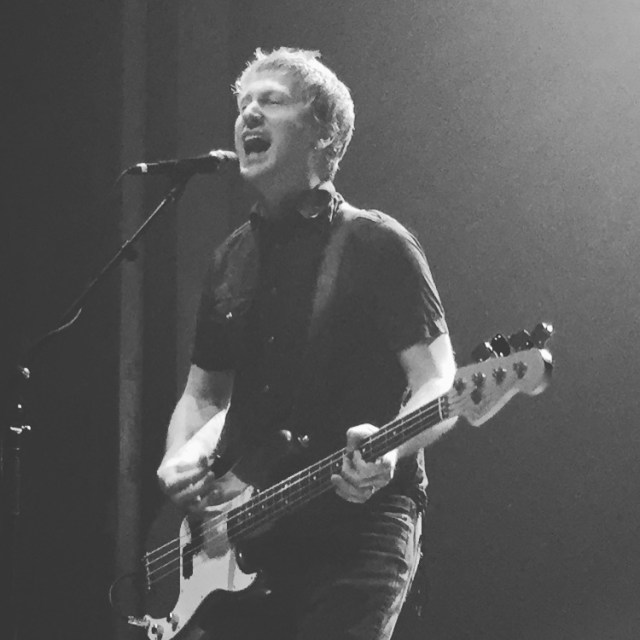
Jason is one of the hardest working musicians in show business, currently recording his own album as well as preparing for the second leg of Bob Mould’s tour. If this weren’t enough, he still has his painting/handyman business and 3 kids. All of these responsibilities don’t seem to slow the 45-year-old musician down. I recently saw him play with Bob Mould’s band and his energy and love of playing were clear. This man gives his all to his music. And it shows.

I was lucky enough to be able to ask Jason some questions recently. Not a man to take himself too seriously (follow him on Instagram and Twitter and you will find yourself laughing out loud at his frequent comedic posts), he responded in true form.


 J. You started your first band, Verboten, at such an incredibly young age. What inspired you, and did you always imagine yourself being a lifelong musician?
J.N. My dad took me to see The Kids Are Alright when it was released in theaters. I was 8. I liked Kiss, The Ramones, and The Beatles already, but The Who were a whole new level of intensity and importance to me. A year later, my mom and step-dad bought me a guitar. I started writing songs and looking for musicians to play with. By age 11, I had a band (Verboten) and we were playing clubs. It’s sort of absurd when I think about it now—the level of intensity I had.
J. Dave Grohl credits you as one of his main inspirations for becoming a musician. In your own music, particularly Split Single, I think I hear some Big Star and Guided By Voices influence. Are these some of the bands that have influenced you? What other bands influence the music you write?
J.N. Yes, I love GBV and Big Star. Cheap Trick is huge for me. They are from the Chicago area (Rockford) and I saw them often as a kid. Now that I’m older, I find inspiration from less obvious sources; a lyric I think of, a synth part I hear on a college radio station, a drum beat I hear but misinterpret where the “one” beat is, etc.
J. You are certainly well known in the music world, but your name seems to escape those in the mainstream. Is this frustrating or is it nice to be a professional musician that can fly under the radar and avoid many of the pitfalls of instant face and name recognition?
J.N. I would say I am most certainly not very well known in the music world. I know this because I’ve been to all of my shows. I would say I’m comfortable as a working musician who’s sometimes not working.
J. I took my 18-year-old son to see you, Bob, and Jon recently in NYC. I insisted he wear the earplugs I brought, knowing full well the volume at a Bob Mould show. How do you handle that kind of volume night after night?
J.N. You made the responsible decision.
J. You’ve toured with so many different yet amazingly talented acts. Do you have a favorite band or musician to tour with or do you enjoy changing it up and playing to different types of audiences?
J.N. The three bands I play in now have very similar audiences. I love my three current bands.
J. What are your plans now that the first leg of the Bob Mould tour is over? Are you planning anything new with Split Single?
J.N. I’m making a new Split Single album right now. Very excited about it. I’ve heard rumblings about a potential Superchunk show. Lots of Bob Mould Band shows coming up in the fall. We are thankful and excited that Bob’s new album Patch The Sky is doing so well.
J. You’ve had such a varied and interesting career so far. What would you like to do next?
J.N. I’d like to go get a sandwich.

John Doe, Cafe Nine, New Haven, CT 6/11/16 (Including a Review of “The Westerner”)

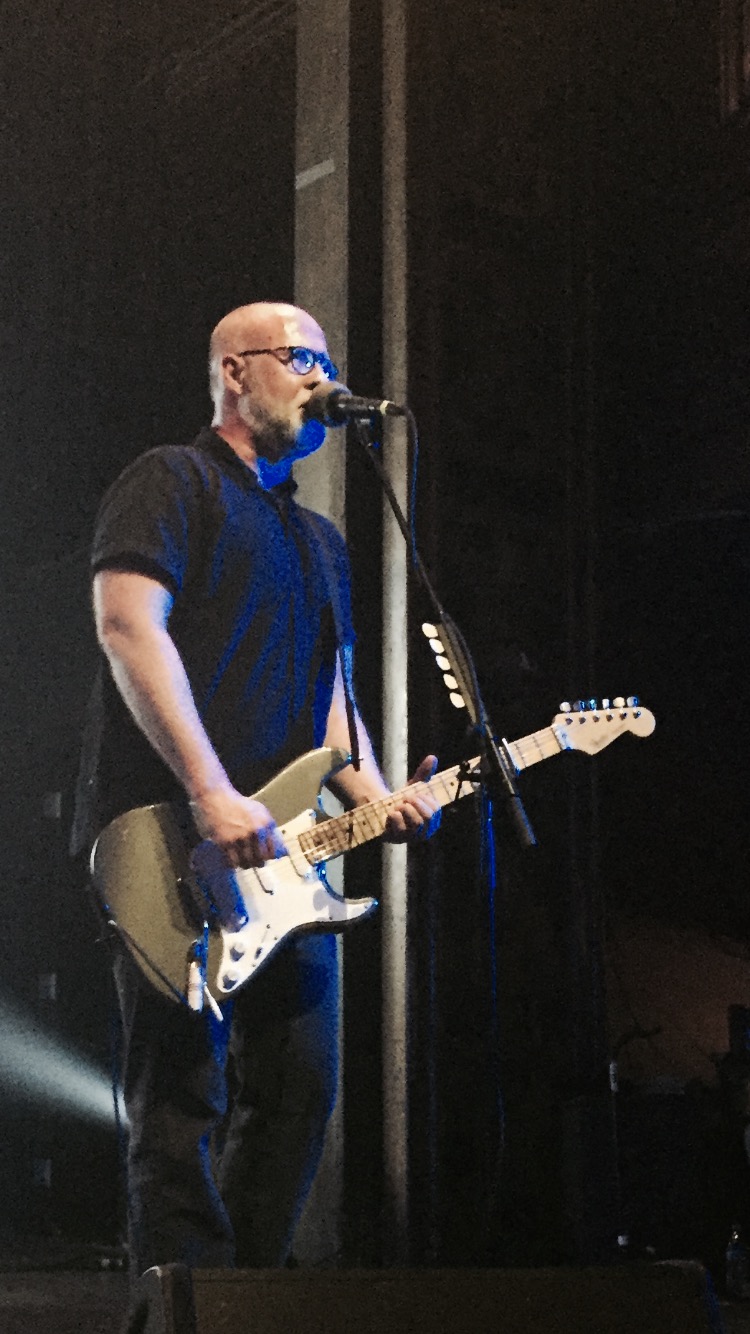
John Doe is a punk rock legend. Together with ex-wife Exene Cervenka,  drummer D.J. Bonebreak, and guitarist Billy Zoom, they formed X. They were a band that literally changed the musical landscape in Los Angeles in the late ’70s and early ’80s. They paved  the way for countless other bands to leave behind the corporate rock and disco mentality that was so prevalent in the country at the time and shake up the music world as we knew it.

John Doe, despite being punk rock royalty, has always had a bit of folk and country in his soul—folk, rockabilly, and country are laced liberally throughout many X songs. John also tapped into these roots with The Knitters, a side project he formed with fellow X band members Exene Cervenka and D.J. Bonebreak. This group showcases a genre very different than that of X, with original music, covers of country music songs, and acoustic versions of X songs.

In The Knitters, as well as in X, John’s lovely voice and really good songwriting was often overshadowed by the stage presence and exceptional songwriting of Exene. John needed to be on his own for his light to shine as brightly as it was capable of doing. When he released his first solo album, Meet John Doe, in 1990, his brilliance and ability to stand on his own became clear. Over the last 16 years, he has released 11 albums and has continued to grow even stronger in his songwriting, lyrics, and personal style. His star really shines most brightly when performing his own solo music.

When I spoke to John recently at a book signing and live performance at Rough Trade in Brooklyn,  I asked him how difficult it was to be touring with both bands this summer. He looked at me, laughed, and said “Well, somebody has to pay all the bills.” That’s the bittersweet thing about someone who has influenced music so greatly. Their influence can be heard in musicians decades behind them, but their paychecks and mainstream recognition don’t always match up to those following in their footsteps. Like so many artists, writers, and musicians before them, these innovators often don’t reap the benefits of being the ones that changed the landscape. They often have to work their hearts out just to survive in a comfortable manner.

Bandmate and sometimes-opening-act Jesse Dayton recently joked about aging punk stars using country music as “their retirement plan” and how the “alternative country” or “cowpunk” genre  seems to be all the rage, particularly among aging punk and alternative artists. The difference with  John is that he’s  been performing this music since the times it defied classification. This music isn’t something he’s cashing in on. It’s just the music that seems to flow seamlessly from his soul.

John, at age 63, is not slowing down. He has recently released a book of essays about the punk scene in Los Angeles in the late ‘7os and early ’80s called Under The Big Black Sun. With essays from John and other musicians including Exene and Henry Rollins, the book provides an insightful and accurate look into how these musicians lived, what they felt, and the music they made during this time. As a lifelong X fan (My kids knew the lyrics to most X songs from the time they were in diapers), as well as a huge fan of John’s solo work, I was thrilled to read Under The Big Black Sun. As a punk fan from NYC and CT, I’d often been intrigued by how the L.A. punk scene started and what it was like being in the midst of it. This book really brings me there (I will say, however, that as an East Coast/NYC punk, I did take slight offense to John’s assertion that L.A. punks were tougher than New York punks, but I digress…).  The L.A. scene, often overshadowed by the New York and London punk scenes, was just as critical to music. This book really brings that point home.

As if he weren’t busy enough, John has also released a new album, entitled The Westerner. This album was inspired by his time in Arizona, when he was recording and spending time with friend and author Michael Blake (Dances With Wolves), in the hours leading up to his death. Themes of this beautiful and haunting album include the inevitability of mortality and the dark expanse of loneliness, so beautifully exemplified by images of the Arizona desert. Most of the tracks on this album are softer and more haunting than what we are used to if we only know Doe through his work in X. Doe is joined by Debbie Harry of Blondie on one of the albums more upbeat tracks, “Go Baby Go”, but when you are finished listening, the songs that stick with you are beauties such as “Alone in Arizona” and “Rising Sun,” which speaks of friend Blake, “In his dreams he still flies, In his dreams he still rides,” touchingly .

Doe describes this album as “not country, but most definitely western” and that says it all. The Westerner is Americana at its finest.

I was able to see John and his band perform at Café Nine in New Haven on June 11, 2016. The band, with the incredibly talented Jesse Dayton on the guitar and X drummer D.J. Bonebreak on the drums, was excellent. Jesse Dayton is a shining star, and his guitar playing is exceptional. He was the opening act for John, and his talent is clear. Jesse was a guitarist on the late Waylon Jennings’ last two albums, and it’s obvious why a star like Jennings would want to work with Dayton. He is gifted and I expect that we will be hearing a lot from him in the future.

The setlist was filled with classic John Doe songs such as “The Golden Sate,”, but also included X classics, such as “The Have Nots” and “4th of July.” New releases, such as “Alone in Arizona,” really showcased John’s voice and talent. At 63-years-old, his voice remains clear and true and his passion for his music is evident. In this world of one-trick ponies and one-hit wonders, I’m relieved to see that there are still musicians out there with the capability of singing songs that range from hard and classic punk to lovely and poignant melodies. John Doe is a class act. And one with a very long career both behind him and ahead of him.

Subhumans interview, Cafe Nine, New Haven, CT 6/7/16

The Subhumans are one of those bands from my early teens that epitomized classic British anarcho-punk. With songs such as “Mickey Mouse is Dead” and the punk classic “No” (“No I don’t believe in what you say, you’re just part of what I despise. Yes you’re part of the fucking system, I ain’t blind, I can see your lies”), the band sang about all of the classic punk themes: oppression, mental illness, class structure,apathy, and angst. Between the release of their first album in 1981 and their breakup in 1985, the band began to experiment more with their sound. They cited musical differences and disagreements in direction as the main reason for their split.

Singer Dick Lucas joined the band Culture Shock in 1986 and then formed the punk/ska band Citizen Fish in 1990. The Subhumans remained fan favorites and briefly reunited in 1991. They had a more extensive return in 1998, where they played shows in both the U.S. and the U.K. The band continued to tour together on and off for many years. In 2007, they released their last album, Internal Riot, and have remained a semi-regular touring band ever since.

I consider the band one of my favorite punk bands from the U.K., and was thrilled to learn they would be playing at Cafe Nine in New Haven. I was even more thrilled when Dick Lucas agreed to a sit down for an interview with me before the show. I met Dick and the rest of the band ( Bruce Treasure on guitar, Phil Bryant on bass, and Trotsky on drums) in a dimly lit band room. Dick was instantly recognizable to me, and as he had told me via email, he is generally the one band member that does the talking during interviews. I found him to be passionate about his beliefs, well-spoken, and well-informed about the issues going on in our world today. He is also still really enjoying the fact that he gets to continue doing this for a living.

J. What was it about the punk scene that first drew you in?

D.L. Well, when it all started I was about 16. I was hearing bands like The Clash and The Sex Pistols, and it was really just good music. They were singing about things like bored teenagers, anger at the system. It just seemed a lot more realistic than anything that had come before. And all of it packaged up nicely in little 2 and 1/2 minute blurts.

J. Were you more influenced by the British punk bands, or did you get any inspiration from the punk scene going on in the U.S. at the time?

D.L. I was definitely inspired by the British ones. The only time we had access to listening to anything else was on a radio show by John Peel. He was the only one that would play things we couldn’t hear anywhere else. So, I didn’t even really start hearing that stuff until later on.

J. You’ve always had a passion for writing songs about some of the evils of government and the people in charge. What are your feelings about politics in the world today?

D.L. How the people in charge interact with the people in their own countries, the other leaders of the world, economics, war … there just seems to be too much macho symbolism. I think that if there were more women leaders there would be less war and strife. However, when you take into consideration people like Margaret Thatcher, that hasn’t always been the case. We’ll see what happens when Clinton gets in, if she does. Lyrically speaking, the basic idea is to question attitudes that seem to dominate the status quo of how the majority of people behave in society and how that affects the positives towards working with each other, and the negatives, which seem to be the dominating force in keeping us apart. I write more about the negatives so that people are more aware. Knowledge is the first step in any kind of change and making things better.We are becoming a dumbed-down culture.

J. When I was first drawn into the punk scene, the lyrics were what drew me in. Do you think there are still bands out there today that speak to addressing the evils of society, or is it becoming less prevalent?

D.L. There are plenty of young bands that are emerging that sing about the evils of society and what’s right and wrong in the world. The days of singing just about beer and fighting are a thing of the past. I’d like to think that the kids are still hungry for messages in their music. Hopefully they always will be. It brings you together, makes you feel like a community.

J. I can only imagine, coming from the U.K., how the current political climate in the United States must appear to you. What is your take on U.S. politics at the moment?

D.L. It’s completely horrific. It’s the same way Hitler got into power, that Trump. By putting the blame for everything that’s wrong on minorities, using language that draws in the most gullible, the least educated, and extending it into racism and bigotry. Playing the racist card seems to work, because all racists like to think they aren’t alone in their thoughts. These are the same kinds of people that’ll believe anything if you feed it to them in a way that makes them feel superior. It’s shocking that a man like this has about a 50/50 chance of becoming president of the U.S. There are some really dangerous right wing groups coming into power, Golden Dawn in Greece, etc. It’s scary, actually. These right wing groups are getting support by promoting a patriotic backlash against refugees and people who aren’t white and have money. The fear factor, the scaring people into thinking these minority groups are harming the country as a whole. But that’s how people like this not only stay in power, but make all of their money, too.

J. Back to your music. You haven’t released an album since 2007. Any plans to release any new music, or do you plan to remain a touring band exclusively?

D.L. We are hindered by where we live.Our drummer lives in Germany, so we aren’t together in the same place very often. Makes it harder to make new music.We have about 2 completed tracks and 3-4 semi-completed ones, so it’s a work in progress. Slow progress, but we haven’t dried up creatively just yet.

J. Does touring get tiring?

D.L. It depends on whether or not we let it get tiring. How much whiskey we put down that stays down. You know, sometimes you still have a hangover from the day before and get up on that stage and sort of sweat it out. But over the years, you learn to be a bit more moderate. It’s so much more fun not being moderate!

J. Is there anything you’d like the readers of my blog to know about where the band is going or what your plans are for the future?

D.L. We don’t like to plan too far ahead into the future. We just keep on going and that’s what has appeared to work for us so far. The more plans you have the less they come into fruition. We are lucky enough to still get asked to play for people. I plan on doing this for as long as I can. There is no retirement age for us.We’re just going to keep on going.


Bob Mould, Webster Hall, 4/29/16

image

Photo by Amanda Hatfield, Brookyn Vegan .My joy is pretty evident!


Bob Mould. He has  been my musical hero since I was about 15 years old and got to see him live with Husker Du in a little club in Bridgeport, CT. Through his days in Husker Du, his time fronting the band Sugar and his many years as a solo artist, all of Bob’s music shares equal time in my weekly music rotation.There is literally never a day that goes by without me listening to at least a song or two. Bob’s lyrics have always mirrored things going on in my own life, and because of that I’ve always felt a connection.This man has some kind of supernatural ability to see into the deepest recesses of the souls of so many of his fans who’ve had times when in their lives when they were outcasts, loners or misfits. He just gets us.

Because of the many years I’d stopped seeing live shows, I hadn’t seen Mould perform as a headliner since I was 15. I was blessed enough to see him join Dinosaur Jr. on stage at their show in NYC in December, 2015. This tiny taste of how hard Bob plays live and how much he gives to his audience made me even more determined to see him as a headliner.

My son, who is 19 years old and a musician himself, has a real appreciation for Bob.  I got us both tickets to see him play at Webster Hall in NYC on April 29, 2016. This was going to be a great show to share with him.

Any of you that have read Bob’s memoir understand that he likes to date a certain type of man. He calls them “Bears”. They can be identified by their stockiness, scruffy beards and fondness for flannel shirts. When the night of the show came and I looked over at my bearded, flannel wearing and very cute son, I felt a twinge of guilt. Maybe I shouldn’t have suggested that it was cold out and he might be warmer in flannel? Kidding! I didn’t really try to bait Bob with my handsome kid. But if he wanted to talk to us after the show I wouldn’t mind! In all seriousness, though, Ryan and I were beyond thrilled to be at this show and made sure to be first in line so we could get right up to the stage. We succeeded.

Ted Leo was the opening act. While he was entertaining and really very good, I’ll be perfectly honest and admit that I couldn’t wait for him to finish so that Bob could begin. My son, on the other hand, became a real fan of Leo, and came home to download some of his music.

When Bob and his longtime band, bassist Jason Narducy (Superchunk, Split Single) and drummer Jon Wurtser (Superchunk, Mountain Goats, Split Single), finally took the stage I was beyond ready. I had really hoped that Bob would delve into his extensive catalog, not only playing his solo stuff, but including Sugar and Husker Du as well. I didn’t have to hope for long. The set began with not one, but two, Sugar songs.;  “A Good Idea” and “Changes.”

Throughout the night,  Bob delved frequently into the back catalog of music so many of us in the crowd were hungry to hear. While the set was rich with new material from the incredible new album “Patch the Sky”, it was also balanced with frequent trips into the past. Husker Du was very well represented, with some of the highlights including “Something I Learned Today” and a beautiful and touching rendition of “Hardly Getting Over it” (The teenage girl next to me was literally bawling her eyes out, and if I’m being honest, I had to wipe a tear away myself).

What really impressed me about this show was how hard this band plays. Bob Mould, at 55 years old, plays the guitar harder and louder than musicians half his age. Wurster and Narducy also play with incredible sound and energy. They were happy to be there and happy to play for their fans. It was obvious in the energy they exuded. They were not going to be satisfied with going through the motions. This band came to play their hearts out and they succeeded.

The night ended with a 3 song encore set that began with Jon Wurster coming up to the microphone to sing the Ramones classic “Beat on the Brat” while Ted Leo took over on drums. This was followed by “Love is All Around”, which is the theme song to the Mary Tyler Moore show, and ended with an incredible version of Husker Du’s “Makes no Sense at All”

The night was full of energy, joy and outrageous volume. Bob and his band played their hearts out. I could not have asked for more. And while I missed the presence of my closest Bob Mould fan friends, who couldn’t make it to the show, I was extremely glad I got to share a show like this with my kid.

#bobmould #jasonnarducy #jonwurster